A series of structural shifts has permanently rewritten the medtech operational playbook. Instead of transactional relationships, forward-thinking OEMs are pivoting toward long-term strategic alliances that provide lifecycle-spanning expertise and robust supply chain resilience.
Our own Vice President of Business Development, Jim LaVersa, recently contributed to a comprehensive industry roundtable in Medical Product Outsourcing (MPO) Magazine, highlighting these very shifts. Commenting on the robust upward trajectory of external collaboration, LaVersa notes:
“Outsourcing in medtech is clearly growing. Across our existing customer base, we’re seeing rising demand spanning a diverse range of medical sectors. New customers and prospects are increasingly seeking partners who can accelerate time-to-market and bring specialized manufacturing and in-house automation expertise to the table. Harmac has deliberately aligned its capabilities and resources to meet these expectations.”
Moving Beyond Transactional Metrics to True Cultural Alignment
When original equipment manufacturers (OEM) evaluate the shifting medical device landscape, selecting a contract development and manufacturing organization (CDMO) requires looking deep into the operational philosophy of a potential partner. Traditional evaluation models frequently place excessive weight on rigid corporate metrics, overlooking the foundational dynamics that dictate long-term program success. As Jim LaVersa explains:
“OEMs seeking a new CDMO partner should look beyond metrics like size or revenue. Cultural alignment is often underestimated. It’s important to find a strong partner with values and ways of working that complement your own organization and make for a far more productive relationship. From there, strong quality systems and proven technical expertise are non-negotiable. And nothing replaces seeing the operation firsthand.”
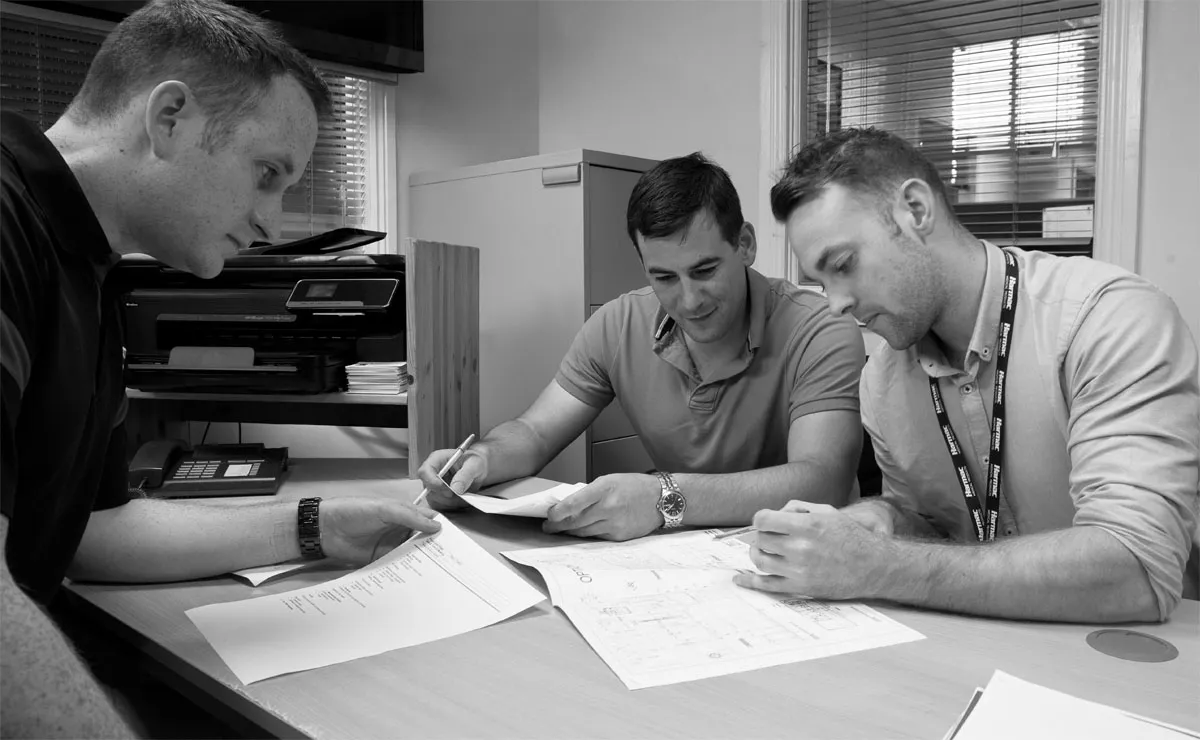
This collaborative model redefines how the two organizations interact across the entire lifespan of a medical device. Relationships have moved far upstream from the traditional, siloed hand-offs of past decades. At Harmac, we observe this deepening integration firsthand, noting that relationships with customers have become notably closer and more collaborative. Teams are engaging with OEMs earlier in the product lifecycle – not just at the manufacturing stage, but upstream in design, regulatory planning, and supply chain strategy. This hands-on collaboration delivers better outcomes for customers while continuously strengthening the partnership.
To translate this philosophy into daily execution, a partner must demonstrate collaborative capability through technical depth, structural reliability, and proactive communication. At Harmac, this is achieved by assigning a dedicated project lead with clear accountability from the outset, ensuring customers always know who owns the project milestones. This combines hands-on engineering support with regular project and business reviews, building a genuine partnership through consistent follow-through over time.
End-to-End Capability and Upstream Engineering Support
True full-service partnership requires a CDMO to possess comprehensive capabilities that support an innovation from early concept all the way through mature commercialization. Harmac operates as a full-service CDMO, offering design support, feasibility assessment, and design for manufacturing (DFM) expertise, including prototype development. Alongside core manufacturing capabilities, this approach allows the team to engage with OEMs from early concept through commercialization, driving manufacturing efficiency, enhancing product reliability, and supporting meaningful innovation at every stage.
A major advantage of this comprehensive framework is vertical integration, which removes supply chain fragmentation and mitigates execution risk. Jim LaVersa highlights the value of bringing the production of purchased components in-house:
“For the majority of our products, our process begins with raw resin and ends with a finished, packaged medical device ready for market. This truly end-to-end capability helps customers simplify their supply chain, reduce complexity and cost, and work with a single accountable partner across the full manufacturing journey.”
Redefining Resilience: Inventory Visibility and the Dual-Site Model
Recent global disruptions have caused many medtech organizations to reexamine traditional lean inventory practices. In an industry where patient care hangs in the balance, continuity of supply must take precedence over short-term holding cost efficiencies. Jim LaVersa details the framework for balancing operational readiness with structural resilience:
“We prioritize continuity of supply over lean inventory efficiency. While efficiency remains important, we believe the risk of a line down event or interrupting supply to a customer far outweighs the cost of carrying strategic buffer inventory. We’ve adopted a hybrid approach, combining lean manufacturing principles with deliberate safety stock levels and dual sourcing where applicable.”
Achieving this level of supply chain resilience requires deep collaboration throughout the entire vendor network. Harmac maintains close contact with key suppliers and the overall supply chain through regular face-to-face meetings when feasible. Involving suppliers early in the product lifecycle and working closely with them day-to-day helps ensure visibility to demand, which directly improves continuity of supply, quality adherence, and proactive communication around customer needs.
Furthermore, managing macroeconomic uncertainty involves rethinking how redundancy is structured. While traditional dual-sourcing models introduce multi-vendor complexity and quality variations, a dual-site global manufacturing approach provides a highly compelling alternative. Jim LaVersa explains the unique value of this model:
“Rather than splitting volume across multiple vendors, the majority of our customers choose to consolidate with Harmac while benefiting from the fact we manufacture the same products across multiple Harmac sites globally. This dual-site model delivers the supply chain redundancy and risk mitigation OEMs are seeking, without the complexity, quality variability, and qualification burden that comes with managing multiple supplier relationships.”
Consolidating volume within a single trusted network further enables the scale needed to justify meaningful investment in automation, while allowing regional distribution logistics to be optimized for maximum responsiveness. This strategic approach directly matches the broader industry movement toward nearshoring and reshoring to improve responsiveness. Harmac’s multi-site global footprint in the United States, Ireland, and Mexico positions the organization perfectly to support these evolving geographic requirements.
Through this infrastructure, OEMs are placing greater value on developing robust supply chain strategies, dual-sourcing/dual-site approaches, and clearly defined risk mitigation frameworks. In response, elevated focus on customer service levels, inventory visibility, and continuity of supply ensures that the CDMO remains a reliable, responsive partner in an increasingly complex environment.
Future-Proofing Through Custom Automation, Sustainability, and Value Creation
As the medical device landscape evolves, long-term competitiveness depends on the forward-looking technologies integrated into the manufacturing process today. The acceleration of advanced automation and artificial intelligence represents the next frontier for CDMOs. Harmac differentiates itself by maintaining a robust, internal automation engineering group capable of creating bespoke manufacturing assets. Jim LaVersa highlights this technical advantage:
“The integration of AI and advanced automation into medtech manufacturing will continue to accelerate. The CDMOs that invest ahead of that curve will be the ones best positioned to serve OEM needs over the long term. A meaningful differentiator for Harmac is our ability to design and build custom automation in-house, which compresses time-to-market for our customers and ensures our equipment is optimized for the specific products we manufacture.”
These proprietary automation capabilities do more than just ensure dimensional repeatability and compress timelines; they serve as a critical tool for identifying genuine operational efficiencies. Amidst ongoing cost pressures across the healthcare sector, the strongest relationships still focus on value. The most effective response is to work collaboratively with customers to identify genuine efficiencies: process improvements, automation opportunities, and waste reduction initiatives that create real savings without compromising quality or reliability. Transparent, open dialogue keeps these conversations highly productive.
Crucially, these optimized, automated processes also provide a direct pathway toward satisfying corporate environmental mandates. Sustainable practices are increasingly vital to modern medtech partnerships, as Jim LaVersa concludes:
“Sustainability is an increasingly important consideration across the medtech industry. At Harmac, we build environmentally responsible practices into our development and manufacturing processes, actively working to reduce our carbon footprint and minimize waste to landfill. We’re also seeing growing demand from OEMs requesting alternative recyclable materials and solutions that lower environmental impact.”
Securing Long-Term Partnership Value
Ultimately, the ideal relationship between an OEM and a CDMO is a true partnership built on trust, transparency, and shared goals. As a mid-tier CDMO, Harmac prides itself on being highly responsive and genuinely customer-focused in a way that larger organizations often struggle to replicate.
With 45 years of experience, Harmac has built its reputation on long-term partnerships, working hand-in-hand with customers every day – not just to deliver high-quality manufactured products, but to provide real value, engineering support, and the kind of collaborative engagement that makes a measurable difference in patient care and overall business success.
Need A Partner That Can Do More Than Manufacture?
Choose an agile, globally positioned CDMO that can support early-stage development, mitigate supply chain risk, accelerate time-to-market, and provide long-term operational value.
