
Tooling & Automation
Medical Device Tooling. Getting the Right Pieces in Place.
As medical device companies scale production, they often face complex challenges.
These include maintaining consistent product quality, managing labor and supply chain costs, and meeting strict regulatory requirements – whether producing in low or high volumes.
How we can help
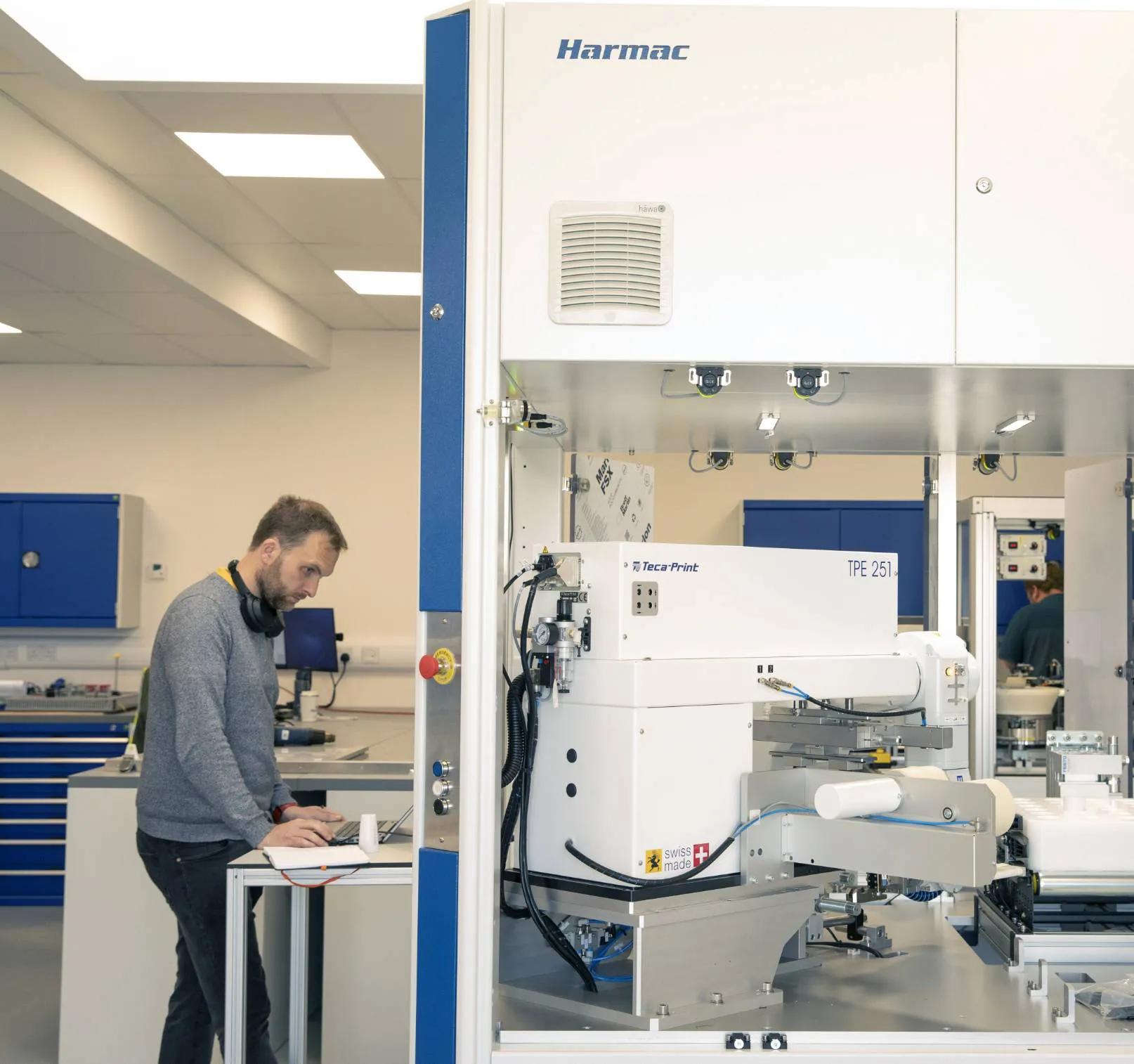
Our tooling and automation capabilities are designed to scale with your product’s success.
In-house skilled technicians, automation engineers, and product development teams work together to design, build, and refine flexible, proprietary semi-automated and fully automated systems that meet evolving production demands, while maintaining the highest levels of quality, consistency, and regulatory compliance.
Tooling Design Experts
Across our global facilities, Harmac operates in-house production and fabrication centers where we develop custom tooling and proprietary automation. This integrated approach translates directly into key advantages for our partners in quality, speed, and cost-efficiency.
Our designers, technicians, and toolmakers collaborate directly with customers to align automation solutions with production goals, optimizing speed, repeatability, flexibility, and overall efficiency, while ensuring compliance with global regulatory standards. By standardizing tooling across multiple locations, we minimize variation, reduce supply chain risks, and lower total cost of ownership for our customers.

Integrated Services
No two projects are the same, which is why we tailor tooling and automation strategies based on device complexity, production volume, material requirements, and application. Our approach focuses on minimizing variables that could impact product quality or slow time-to-market.
We leverage a range of solutions, from simple ergonomic fixtures that optimize manual steps, to advanced robotic automation and vision systems that ensure precise, consistent manufacturing across every batch and every patient. In-house automation applications span component handling, manufacturing processes, and final packaging, giving customers confidence in every unit produced.
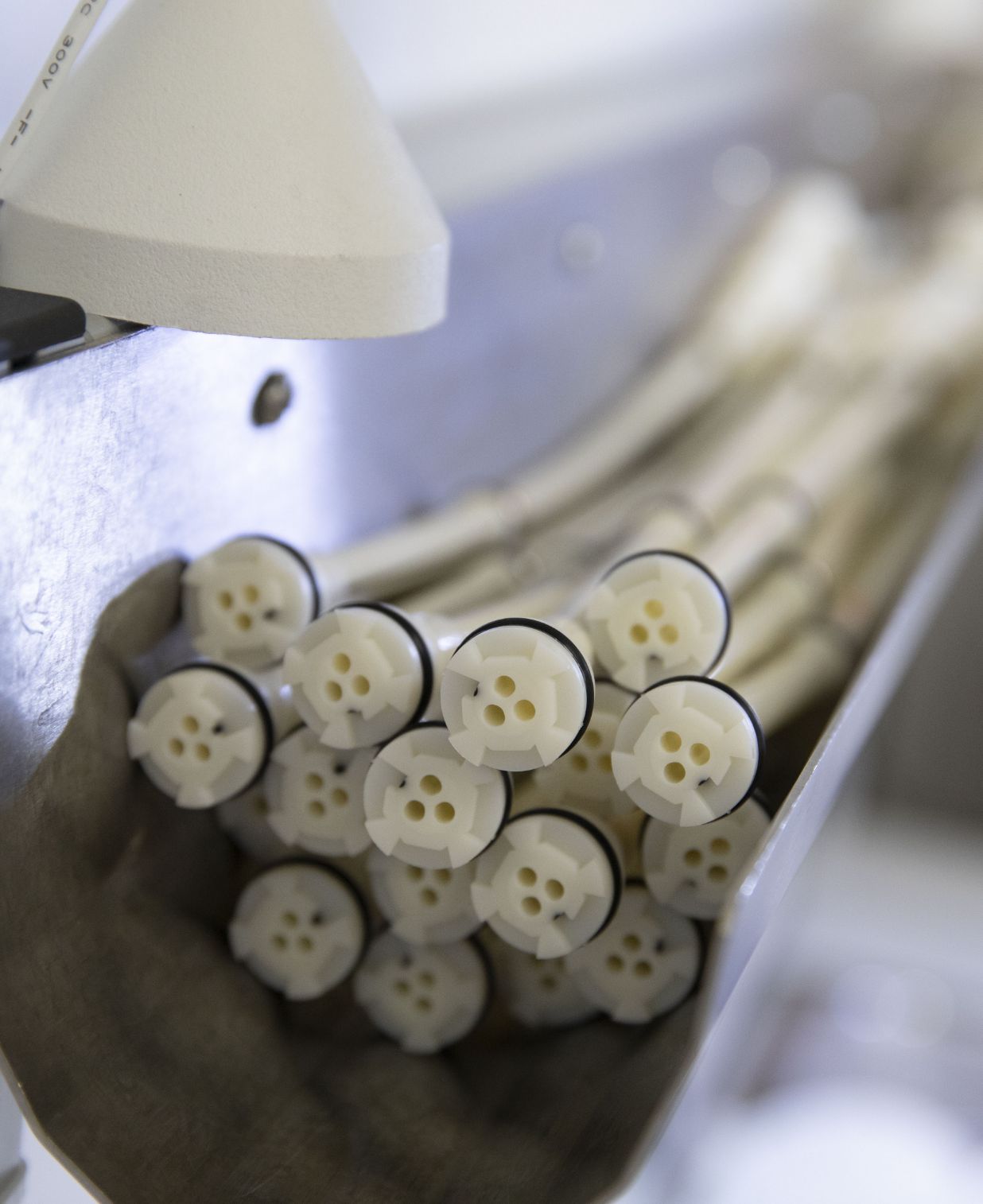
Injection Molding Design
Harmac partners with leading injection mold manufacturers and toolmakers to fine-tune designs for optimal performance and manufacturability. By getting involved early in the design process, we help transform initial concepts into smarter, faster, and more cost-effective production.

Optimize material and component usage

Reduce costs

Accelerate development timelines
Our strong supplier relationships allow for close oversight during mold design and fabrication, ensuring that specifications are met, supply chains remain efficient, and costly design changes are avoided.
Q&A
Scalability and product lifecycle maturity guide our assembly configurations:
- Manual and Lean Single-Piece Flow Work Cells: These configurations offer superb flexibility and fast turnaround times during early-stage product introductions or lower-volume product runs. They allow for immediate adaptation to demand fluctuations without requiring intensive initial capital expenditures.
- Automated and Robotic Assembly: Our custom in-house automation systems incorporate high-speed vision verification, automated component handling, and robotic pick-and-place systems. This approach delivers maximum throughput, eliminates human error, and embeds repeatable, consistent quality directly into high-volume, life-sustaining medical devices.
The transition depends on product lifecycle stability, assembly complexity, and projected annual volumes. Manual single-piece flow work cells offer excellent flexibility for annual volumes under 100,000 units or products undergoing iterative design revisions. When a stable design scales beyond 500,000 units annually, custom automation – such as integrated vision systems, robotic pick-and-place, and inline testing – becomes highly cost-effective by increasing throughput, reducing labor dependencies, and delivering uniform part quality.
Automation projects typically face risks from poor part consistency or inadequate sensor integration. We mitigate these risks by developing custom automation systems in tandem with our tooling and plastic molding teams. By ensuring the molded components feed into assembly nests with minimal dimensional variation and incorporating real-time, vision-guided inspection checkpoints, we prevent machine jams and keep production lines running reliably.
Our in-house tooling engineers build production molds using premium, hardened tool steels and highly detailed cooling channel placements. Every tool enters a rigorous, predictive preventative maintenance program tracked digitally within our manufacturing systems. This regular inspection and cleaning loop preserves critical tool tolerances and extends tool life across millions of cycles.
Yes. Our custom automation engineering team specializes in embedding 100% inline quality checks directly into the assembly process. This includes high-resolution camera systems for multi-point dimensional validation, inline leak testing for fluid channels, and presence-absence sensors for sub-components, ensuring every device is fully verified before it reaches final packaging.
Got a question for us?
Ask our expert.

Let’s work together
No matter where you are in your manufacturing process, we can help. If you need direct access to our engineering team, you are in the right place.
